








the existence of a soul
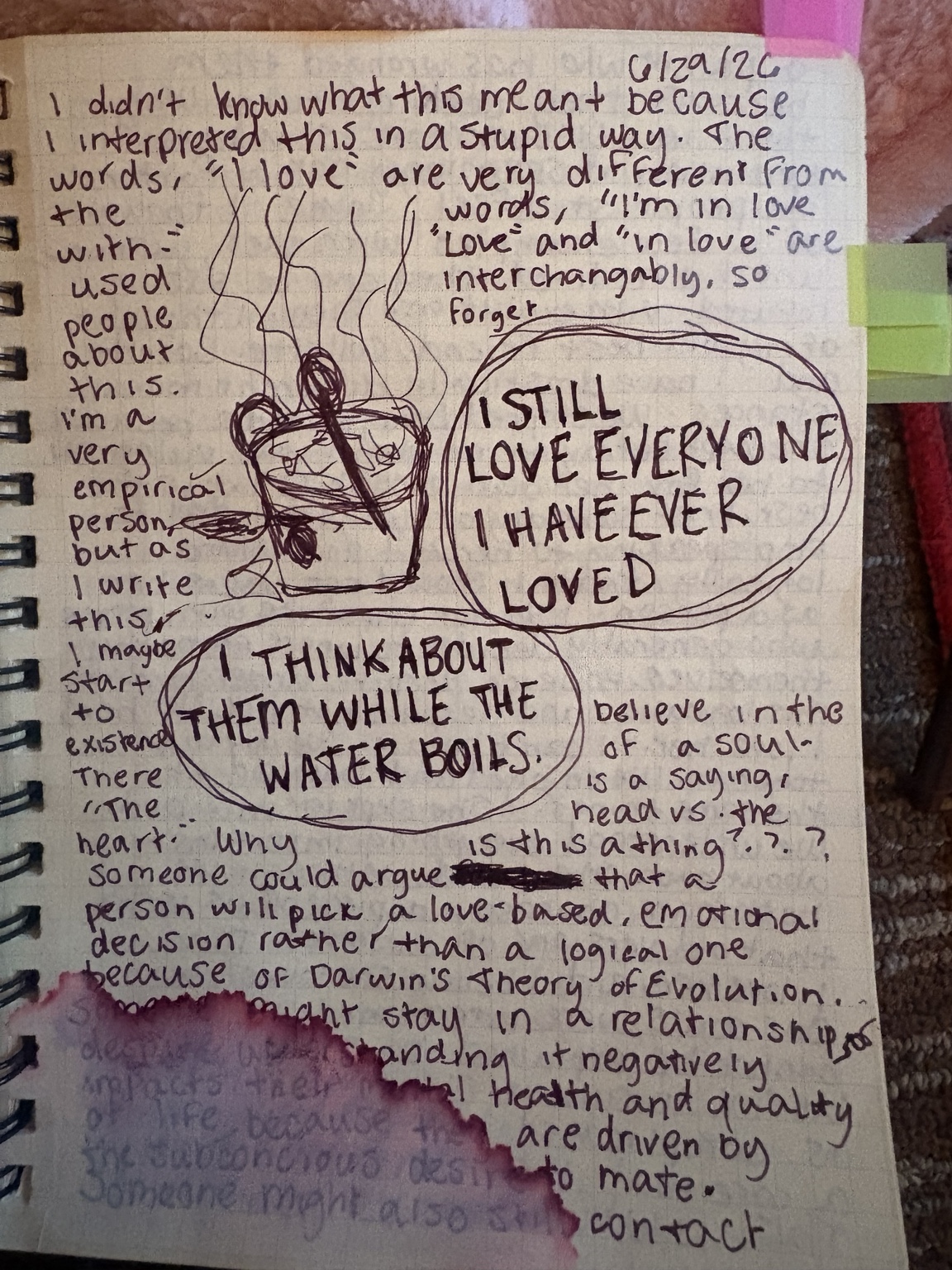
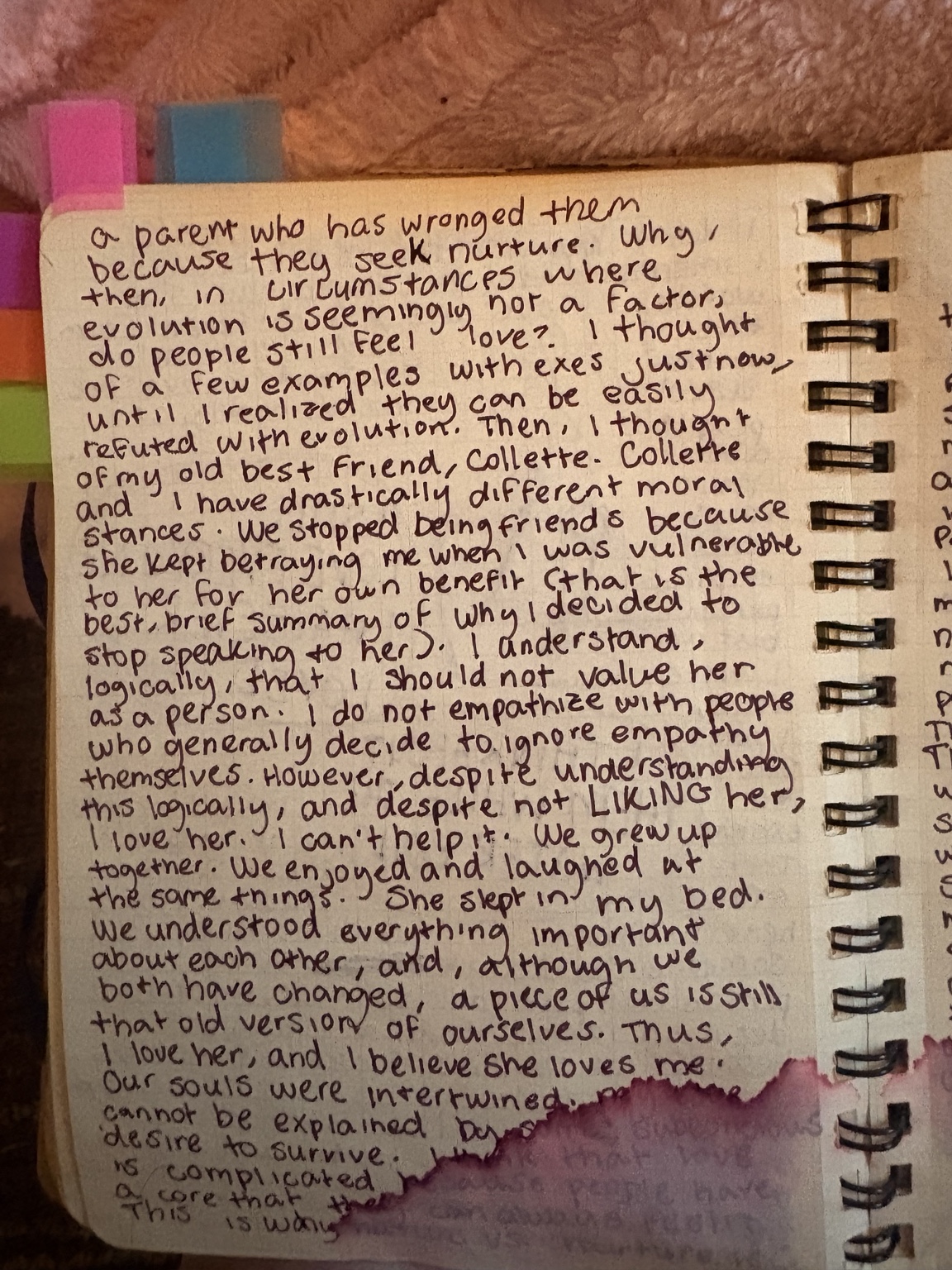
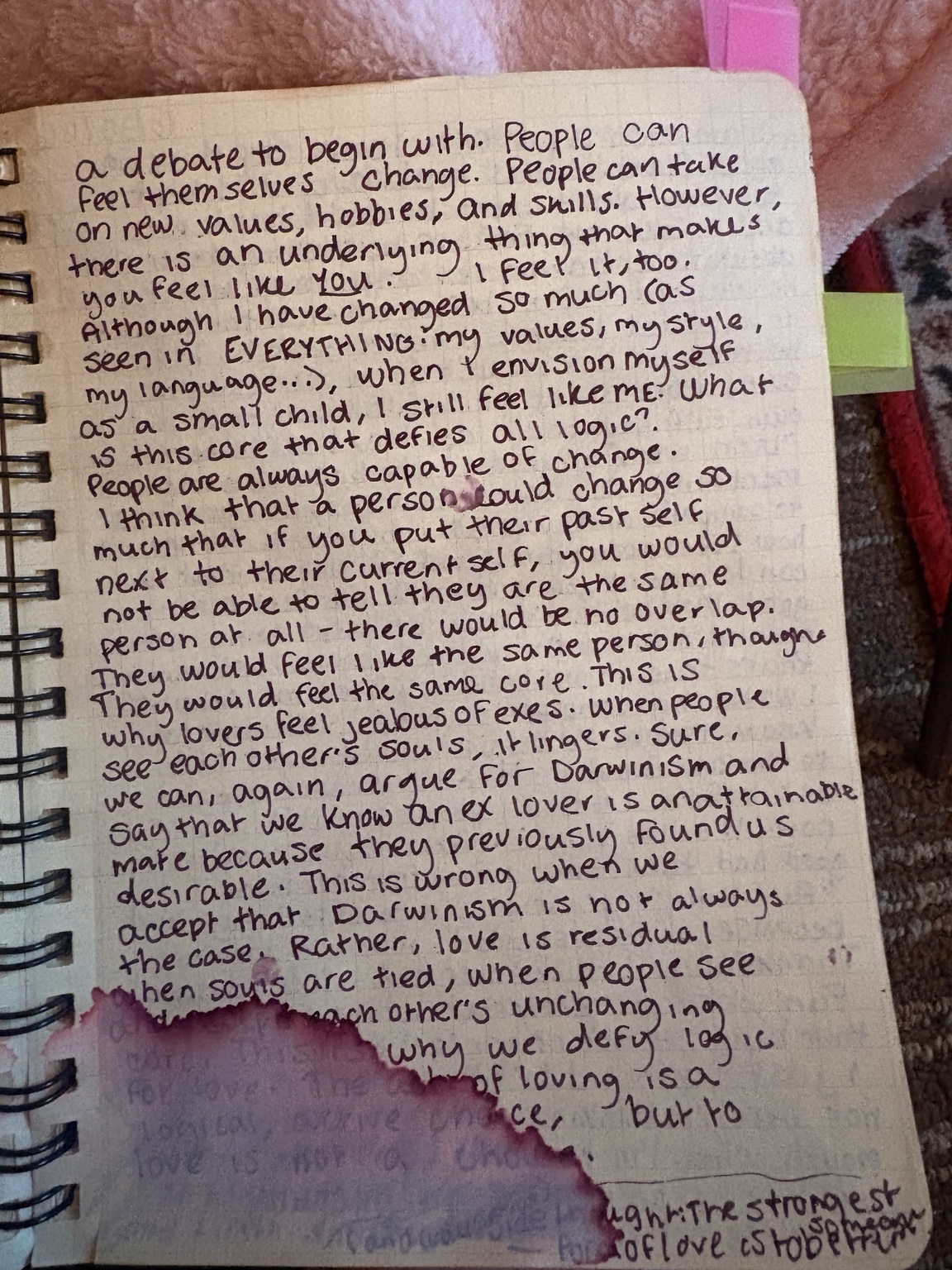
this post is going to intertwine with something i had urgently written in my notebook some months back that i only posted one page of. thus, i will post the full writings here, organizing and elucidating my thoughts further and maybe actually properly explaining them this time around.
i have always been hesitant to accept the existence of a soul given my empiricism toward metaphysics. i tend to distrust metaphysical claims because they are not readily falsifiable, and therefore do not provide much empirical warrant for belief. however, this does not make them false. the same limitation that prevents me from verifying a metaphysical claim also prevents me from treating its absence of verification as a disproof. thus, i have generally remained agnostic. as i have lived longer, though, and accumulated more experiences, i have begun to take the possibility of a soul more seriously.
in my notebook, i had primarily said that this was due to unconditional love. people can continue loving each other even when the form of that love has changed so drastically that it scarcely resembles the original relationship anymore. i think people are at least somewhat aware of this, which is part of why ex-lovers can remain intimidating long after a relationship is over.
there is an obvious explanation for this which requires nothing metaphysical. if somebody was attracted to another person before, who is to say that the attraction could not return? whatever produced that attraction may not have disappeared simply because the relationship ended. an ex from a brief relationship who no longer seems especially desirable might therefore feel relatively unthreatening, but the same person becomes considerably more intimidating if the relationship lasted five years. even if the ex seems comparatively unremarkable from the outside, five years of intimacy is difficult to dismiss. why should duration alter the threat so substantially if what matters is merely attraction?
this is where longevity becomes interesting to me, not because time itself proves the existence of a soul, but because of what can happen to people during that time. after five years, another person has not simply learned facts about you. they have known earlier versions of you and remained present while those versions became later ones. somebody arriving afterward can know the person you are now extremely well, but they cannot retroactively occupy the years in which you were becoming them.
this connects to something else i had written in my notebook that i had almost forgotten about: people can change enormously and still feel like themselves. nearly everything by which i would describe myself has altered over time, and yet when i envision myself as a small child, i still feel like me. if my childhood self and my present self were placed beside one another, there might be remarkably little apparent overlap between them, and nevertheless i do not experience my life as though one person ended and another began. what is this core that seems to defy the obvious logic of change? what persists when so much else can be altered?
this is closer to what i mean when i use the word soul. perhaps a soul is not another quality a person possesses alongside everything else, because the qualities by which we recognize somebody can change. perhaps it is whatever permits all of these altered versions of a person to remain continuous with one another. if that is the case, then loving somebody may sometimes mean becoming attached not merely to what they are like at one moment, but to the person who persists through those alterations.
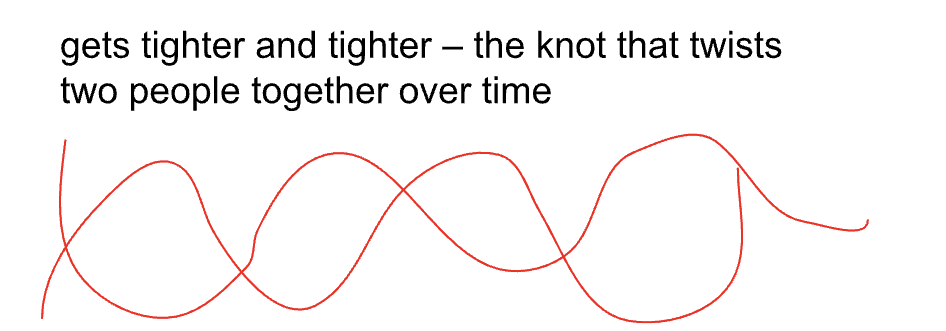
this is where the knot makes sense to me. two people do not simply encounter one another and remain unchanged beside each other; as their lives continue, each becomes entangled with versions of the other that no longer quite exist. the lines become tighter over time because each person has participated in the other's continuity. ending the relationship may loosen the knot, but it cannot return either line to precisely what it was before.
as i was first writing this in my notebook, though, romantic love still felt as if it fell short as an argument for the existence of a soul. romance already gives us ordinary reasons for attachment to persist, which makes it difficult to determine what, if anything, remains for a metaphysical explanation to account for. thus, i started focusing on friendships and familial love, where attraction cannot do nearly as much explanatory work.
i talked about my childhood best friend, who has evolved into a person i would not like if i met her randomly now. i have a strong distaste toward her morals, i do not trust her, and i do not particularly enjoy speaking to her. she repeatedly betrayed me when i was vulnerable to her, which is the briefest explanation for why i eventually stopped speaking to her. logically, almost every present reason for loving her has deteriorated, and nevertheless i love her. i cannot help it.
we grew up together. she slept in my bed. we understood things about one another that mattered enormously to us, and although we have both changed, a piece of us is still that old version of ourselves. i can dislike the person she has become while still loving somebody who is not exactly gone, because the child i knew did not disappear and get replaced by another person. she became this person.
i still want good things to happen to her. when i learn that somebody is treating her badly, some old loyalty reappears despite there being almost no present relationship left to defend. why? betrayal was sufficient to make me stop trusting her, and in some respects even to hate her, but apparently hatred and love are not mutually exhaustive. something persists beneath both of them.
if love attached only to a person's present qualities, then sufficiently altering those qualities should eventually destroy the object of the love. sometimes it does, but sometimes it does not. there are people whom we cease to admire or even like and yet continue loving in some residual way. what, exactly, is that love attached to?
unconditional love was the main thing i wrote about in my notebook, but there is another feeling that makes me wonder about the same thing: the spark. sometimes people meet somebody and immediately feel a spark, whether platonic or romantic. what triggers this spark? i would be lying if i said that i do not feel it too. a lot of my longest friendships began with somebody i felt connected to almost immediately, before i knew enough about them to justify the certainty. talking felt smooth, not forced, good.
sometimes these people and i later discover that we have led similar lives, which may explain why we think so similarly and why the spark persists, but how do we come to seek one another out before we know any of that? how do you see one person in a group and somehow know that they are the interesting one? it is the same thing that happens in a class when you look at somebody you have never spoken to and simply assume that you would be friends with them. is it their demeanor? the way they present themselves? something minute that we register before we understand that we have registered it?
perhaps all of this has an entirely material explanation. that does not particularly bother me. in this sense, a soul might not exist in a metaphysical sense as this divine object, but rather as an underlying thing in nature that we cannot put into words.
01 Oct 2026, 18:07